Widgets

Screenwriter Interview: Timothy Mannion

Longtime Scriptshadow reader Timothy Mannion rolls onto the scene with his first produced screenwriting credit, Brake.


Hello my friends.  Today's name might be familiar to you longtime Scriptshadow readers.  Timothy Mannion entered my logline contest way back in the day and finished near the top with this very logline!  He since went on to option the script AND get it made, with Stephen Dorff starring.  The film will be released on VOD tomorrow and hit theaters on March 23rd.  I had a virtual sit down with Tim to find out how all this happened.


SS: I remember your logline all the way back from my first logline contest. A lot has happened since then. So let me ask you a few questions. First, how did you sell the script? Was it a lot of pounding the pavement? Asking people to read it? Or did you have an “in” somewhere?

TM: The script got a series of emails from producers based on the logline contest, of course. I also sent it to a couple of contacts that I made earlier in the year. Living in Connecticut and being so far from LA, I never thought anything was going to come from it. But, sure enough, I got a call from a director named Gabe Torres who read the script and flipped for it. He won me over with his vision and his time frame for making the dream become a reality, so I optioned the rights to him.

SS: And then how did it go from purchased script to a “Go” movie? Since the large majority of sold specs never get made, that must have been pretty exciting.

TM: It took a little while to gather financing and get casting together since it was independently financed, but in this business it was actually quite fast. I know other writers who have waited 10 years to see their script go to screen. BRAKE did page to first cut in less than a year. Really remarkable stuff. And even then, we shot in 11 days. That was probably the most exciting part, being on set every day, watching a talented director and a great actor, Stephen Dorff, work their magic. I feel very fortunate to be in the "poster" club.

SS: It seems like you conceived of Brake from a very marketable place. This isn’t Blue Valentine 2. Were you just thinking like a businessman when you wrote this or was there a deeper reason you wanted to write this script?

TM: Back when I was writing BRAKE it was “contained thriller” hour in Hollywood. You couldn’t take a step without bumping into one: the coffin, the elevator, the chairlift, the driver's seat of a fast car. BURIED of course was the big trend setter, and I was well into writing BRAKE before I even knew about that. But after seeing how far Chris Sparling took it, I did the opposite of what others probably would have done. I saw that it worked for him so I forged on. I think some people would have said, "Oh well, he beat me to the punch." He did, but you can throw a smarter punch, you can make yours better. It's all learning what works and what doesn't.

I wrote this script because simply, I couldn't make my epic projects work. I was having trouble balancing several characters with set pieces and moving plot and action sequences and flashbacks and reversals and just the kitchen sink. I wanted to quit. I really did. And then I flipped the switch. I told myself to think of something small with 1-2 actors for 90 minutes. Keep it contained, keep it simple. And in doing so it became MY BIGGEST SCRIPT. Not in budget, but in story and in scope. It's not a small film by any means. It has big ideas, big motivations. 

SS: Expanding on that, contained thrillers seem to be one of the best ways to break into the industry because they’re so cheap to make and are relatively easy to market. However, from a screenwriting point of view, when you’re writing about characters (or *a* character) in one place for so long, it becomes hard to keep the story fresh/interesting. How did you go about doing this for Brake?

TM: This is the critical aspect of the contained thriller. Can you keep the plot moving... without ever having your character literally moving? Fortunately for BRAKE our character is moving, he's just not in control of the situation. But for other contained thrillers I think three things are needed to pull this off. 1) Ticking time bomb device. Gotta have something that the reader/audience clings to. Even the oldie but goodie's work. Cellphone dying, lack of oxygen. But go further. Push it. In BRAKE it's a literal clock that counts down. Every 4 minutes you're waiting for... SOME THING. 2) STAKES, STAKES, STAKES. Every single page the stakes have to be raised. The situation needs to get worse for your protagonist at every turn. If it doesn't then why am I reading it? And even then, you as the writer have to create "small wins" for the character. But not too many - the antagonists and the situation have to be one step ahead. 3) Make it personal. It's hard to work the back story of your character into this hectic situation, but if you can fold it in then we get to see that character in a vulnerable situation with this added weight of personal pressure on top. That's the good stuff.

SS: In general, how do you approach writing a script? Are you an outliner? A pragmatist? Or do you just jump in there and rock out?

TM: I usually outline. Although, on the last one I winged it... and I paid for it! I think outlining at least gives you a direction for where the story is going. Hell, if you take a left turn during the writing process all the better. But knowing your ending, knowing your all-too-important third act ahead of time, is critical.

SS: Are you someone who tends to follow the “rules/guidelines” of screenwriting? Or are rules outlawed in Timothy MannionLand?

TM: The most important thing I've learned was the rules. Learning structure was critical to my success. And now I bend them and sometimes break them completely. But I know if I didn't learn the basics first, I wouldn't be anywhere today. Learn them, and if you disagree, well, forget'em.

SS: Brake was your first sale. How many screenplays had you written before that?

TM: I wrote three scripts before BRAKE. All action-oriented.

SS: Were any of them any good? If so, give us a pitch or two!

TM: I wrote one called JULIET 7 about an alien prisoner of War being help captive in an underground silo and an invasion of spaceships that come down, trying to free it. It was a found footage idea, with 4 teenagers being caught in this chaotic situation where we change POV three different times. Looking back with all of this FF craze now happening, I probably should have finished it. (from Carson: That idea actually sounds pretty cool! With FF footage film here to stay, I say you finish it). 

SS: What do you think you know now as a screenwriter that you didn’t know, say, 3 years ago, around the time of the logline competition? What are some of the biggest lessons you’ve learned since then?

TM: I learned that larger than life characters are critical in this game. I read scripts where the characters are flat. The concept is good, it's executed well, good set ups and reversals, great set pieces. But there isn't one defining character. You need a standalone character that makes the reader/producer/audience say WOW, this guy/girl is amazing. I've learned that after BRAKE and I'm still learning that today. Actors want to play timeless characters. Look around: Han Solo, John McClane, Butch Cassidy, Sundance Kid, Beatrix Kiddo, Anton Chigurh, Lisbeth Salander, Hans Landa, Tyler Durden, The Dude, Clarice Starling, Ellen Ripley. You name it. It's why people go to the theater.

SS: What lessons have you taken away from Brake specifically? After watching it go from your personal laptop to digital celluloid?

TM: I'm still processing this to be honest. But I did learn that anything is possible in this industry. You can be a nobody one morning and then your inbox is flooded with emails and your phone is ringing with people who love your work by lunch. And that – ironically - doesn't happen overnight, but it's possible! Anything is possible... AS LONG AS YOU KEEP WRITING.

SS: A lot of writers want to know (specifically) how to land an agent or manager. Could you go into detail about the process of landing a manager/agent? Starting with how long it took after your very first query to land representation?

TM: I queried on my second script. Thought it was awesome. It was a mess. Same story with every writer, I guarantee it. Even the ones who have broken in have this story. My third script didn't leave my computer, no one has ever read it. I was kind of rep-shook at that point. Rejection always hurts. But everyone has been there. The forth script was BRAKE and that was taken off the table before I ever sent queries out to managers, so I did it backwards. But then I landed a manager with cold email queries. It didn't take long because I had small success. I had several offers of representation. Hell, I have a great story where a management company called me 11 months after the initial query for BRAKE was sent. I let this manager go for 5 minutes about what he liked about the script, where he thought it might need a slight tweak, then I told him the script was already sold, shot and in post-production. He just laughed and said congratulations. Things like managers/agents are nothing to worry about until your script is READY. And by ready, I mean great. Everyone wants to rush to that step, but in doing so you bypass the most important part: the writing. 

SS: Any advice you might have for other screenwriters out there? Guys who were in your position a couple of years ago? How can they become a paid screenwriter ASAP?

TM: Advice is hard to give because who I am, really? The only thing I can tell you is if you want to do this, you have to do your homework before you start the writing. Concept, concept, concept. Character, character, character. Nail them down. Don't waste time if you want to make a career out of this. These two points are critical. And trust me, in the last couple of days I suffered from not taking my own advice. Screenwriting is as hard as it is. So don't set up roadblocks that hinder. You're supposed to be doing that to your characters! And most of all, keep writing. If you stop, you're done. If you don't, you're still alive. Anything is possible. Oh, and if you want a shortcut to get paid, write something that can be done on the cheap. People are committing less and less money to financing these days. But a small, compelling piece of work can be scooped up because it's low risk, high reward. That's simple logic that gets passed over, but it's true.

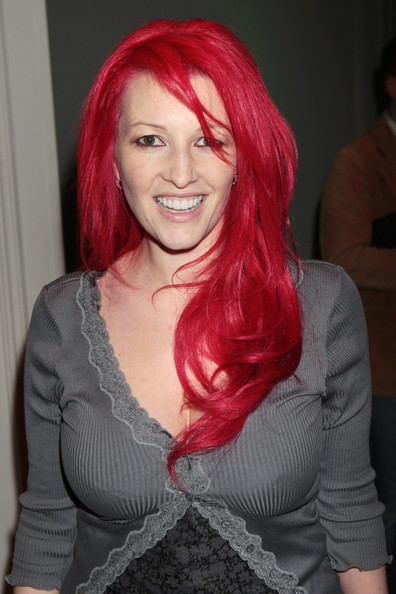
Screenwriter Interview: Jane Goldman

type='html'>

The "X-Men: First Class" co-screenwriter talks screenwriting and her latest movie, The Woman In Black, with Scriptshadow.


Jane Goldman has had the kind of screenwriting career most writers dream of.  She co-wrote "Stardust," "Kick-Ass," "X-Men: First Class," and most recently, "The Debt," all with Matthew Vaughn.  This week, she offers her first solo screenwriting effort, an adaptation of "The Woman in Black," about a young lawyer who travels to a town only to find out it's being haunted by the ghost of a scorned woman.  The movie stars Daniel Radcliffe and comes out next weekend. 

SS: You seem to have a lot of different career opportunities (presenter, model, producer, etc.). What is it that draws you to screenwriting, a path that’s more low-key and that some might say doesn’t get nearly as much recognition as those other ventures?

JG: I’m honestly the least ambitious person I know in terms of a desire for recognition - the idea of being “known” has not only never appealed to me, but actually gives me panic attacks, as I’m chronically shy!

I’ve occasionally strayed off the writing career path as and when opportunities have presented themselves, but writing is what I’ve done my whole life, and what I wanted to do ever since I was a child.

I started freelancing while I was still at school – I used to spend my summer vacations hanging around in magazine office lobbies badgering features editors, which miraculously paid off! When I left school, my first full-time job was as a junior reporter on a newspaper and from there I moved on to working for magazines and writing books (eight non-fiction titles and one novel) before I wound up moving into screenwriting six years ago.

Along the way, I got offered various other jobs in other areas, and I always think it’s worth giving things a shot out of curiosity or just for fun. In the case of TV presenting, I turned out to be pretty crap at it and really didn’t enjoy being on the “wrong” side of the camera! Producing I love, however, and it’s the one other thing I still do when I can, alongside screenwriting.

I genuinely prefer the notion of a low-key career, as I’ve never craved recognition, and with screenwriting, I especially like the fact that you are part of a team rather than having to push yourself forward as an individual.


SS: I have a large UK following and a lot of UK’ers ask me how to break into Hollywood from another country. Can you give any advice to those trying to make it from the UK (or any other country)?

JG: My advice would be to do the very best work you can in order to break in to the film industry in your own country first, as anyone whose work has had even a small measure of success and recognition in their own country will likely be approached by US agents offering representation. Or at the very least, you can legitimately approach US agents yourself. I’d say that’s a far swifter and less stressful approach than moving to LA and trying to get a foot in the door without having anything substantial as a calling card.

The UK has the huge advantage of having radio as a very accessible stepping stone for writers, leading to getting an agent and opening doors into TV and film. But in these days of cheap HD cameras and Youtube there’s also always the option of just getting out there and making a low budget short – write something wonderful and find an aspiring director to make it, or even direct it yourself.

I thought the character development in X-Men was some of the best I’ve ever seen in a superhero movie. What’s your approach to building characters and what do you think the key is to creating a truly memorable character? 

JG: Thank you SO much, that’s extremely kind of you! My initial approach is quite clinical and technical, in trying to make sure that a character has enough traits, complexities and flaws that they feel three dimensional. If I were trying to describe my best friend to you, I’d probably be able to reel off five or six adjectives or phrases without having to think too hard, so my aim would always be to strive for a similar level of detail in a fictional character, even if some of that detail never makes it onto the page. Ideally, you want to know your character so well that you know exactly what they’d do in any given situation. Then the next step is ensuring that all your characters who interact have traits that spark off one another – you want them to push each others buttons, yank one another out of their comfort zones, force each other to see things they don’t want to see. You want them to provide each other with obstacles or be catalysts for change – even the ones who get along.

Putting a touch of yourself, or people you’re close to, into your characters obviously doesn’t hurt either, in terms of making characters who feel real and relatable, and that’s certainly something I – and I think most writers – do.

Being objective, I’d say the key to creating a memorable character is to create someone with familiar traits, but in an uncommon combination, or someone who is a recognizable archetype with a surprising twist. For instance, one of my favorite characters is Maude from Harold and Maude. She’s the archetypal eccentric free spirit with a passion for life and scant regard for law or convention, and if she was also young and pretty with dyed hair and crazy clothes and too much mascara, it would all be eye-rollingly tedious, but the fact that she’s an octogenarian (and, it’s hinted, a holocaust survivor) makes her character fresh, affecting, extraordinary. By the same token, so many memorable characters play the game of combining traits you’d normally use in creating an unlikeable character, with other traits that make you adore them despite yourself – Ferris Bueller is a spoilt, manipulative rich kid who does whatever he wants, Melvin Udall from As Good As It Gets is a rude misanthrope, Tyler Durden is a psychopath, terrorist and all-round reprobate, Dexter and Hannibal Lecter kill people for kicks. But we love them all.


SS: I find that most screenwriters focus on the wrong things when they first start out. What was the primary thing you focused on as a beginning screenwriter and what’s the primary thing you focus on now? Do you look back and roll your eyes at the silly stuff you used to obsess about?

JG: The primary thing I focus on now is economy and pacing. I try to be really strict with the rule that every scene, every beat, every word of dialogue should be doing a job, or else it shouldn’t be there.

I feel like I made most of my mistakes, and hopefully learned from them, when I wrote my novel. I’m not sure that I focused on a specific wrong thing, but I deeply regret that what was published was essentially a first draft and it could have been a million times better if I’d gone through it with a critical eye, been brutal about editing, taken it apart, put it back together again and polished it until I was positive that every scene, every beat, every word was doing a vital job. I was just so happy when my editor didn’t suggest any changes that I cheerfully let it go to print as it was. I really regret that.

SS: You’ve been fortunate enough to work with a lot of talented people. What’s the best piece of story/screenwriting advice you’ve received from them?

JG: One director I worked with was a particular influence, although I unfortunately can’t name him, as the re-write job I did for him was a non-public thing. He had a really interesting policy about minor characters – he believed that whatever function they are serving, you can usually do away with them entirely and find other ways of making the same thing happen without them, and it’s a lot cleaner. I thought that was very interesting advice and have found on numerous occasions since that he’s absolutely right. He also likes his scripts to be notably shorter than the “standard” length for whatever genre, which made so much sense to me. Pretty much every movie’s first assembly in the edit room is always not just a little too long, but way too long, and losing scenes and moments that you love is never a nice experience.

SS: You’ve now written/co-written 5 movies. Which one of those movies was the hardest to write and why? 

JG: Every project has it’s own challenges and pleasures, so it’s hard to single one out. X-Men: First Class had the tightest deadline, and the first draft needed to be delivered very fast because they were waiting to begin preproduction. That essentially meant a few weeks of writing seven days a week, essentially every hour that I was awake - literally only stopping for food, bathroom breaks and bedtime. My back eventually gave out from sitting in an office chair, so I started writing lying down on my couch instead, which has remained my favorite writing position ever since!

The most technically demanding was a screenplay that I recently completed, an adaptation of an incredible novel by Peter Ackroyd called Dan Leno and the Limehouse Golem (I believe it has a different title in the US, The Trial of Elizabeth Cree). It’s multi-stranded, strays into the esoteric and involves a monumental plot twist that is brilliantly concealed in the book by a literary conceit that you couldn’t possibly employ in a film! Figuring out how to approach an adaptation of it was immensely challenging but also unbelievably rewarding.


SS: You take some crazy chances in your screenplays. I particularly remember Stardust having some totally off-the-wall things going on (I loved the ending with the “dead person” swordfight). Do you deliberately try and buck convention or do you follow the traditional screenplay “rules” (3 acts, inciting incident, the protagonist arcs, hero must be likable, etc.)?

JG: Thank you! Re: the swordfight, a friend of mine remarked that it was typical of me to be working on a fairytale and find a way to slip a zombie in! I’d put zombies in everything, if I had my way :)

I think confounding expectations within storytelling is vitally important, but when it comes to structural framework, I don’t see any great need to buck convention - most of the traditional “rules” are there because they work well. It’s like building a house. You could build a house out of poptarts just to be different, but surely it’s more appealing to build it out of bricks and then buck convention in the design itself, knowing that it’ll hold strong.

To do away with things like inciting incident and protagonist arcs would seem a little bloody-minded and self-defeating to me. Some rules you can play with though, I think. In fact, Matthew recently noted that the screenplays we’ve worked on together could sort of be viewed as having four acts, rather than three. I’m not sure that a hero has to be likeable, either - just this year Young Adult and Submarine both played with that convention very effectively - but it obviously requires a different narrative drive to replace the one that is lost. There’s got to be something else that makes you want to see how the story is going to play out.

SS: I’ve been trying to come up with a good ghost story idea myself for years. What do you think the key is to making a ghost story work?

JG: I think the best ghost stories have an emotional core, but the main thing is probably mining what actually, genuinely scares you. I think with other genres you can approach things technically, but with horror – just like comedy - you’re actually trying to invoke a physical reaction in yourself and others. I think it’s not about finding something that seems scary, but a notion or collection of elements that actually make your skin creep, or send a shudder down your spine, or have you looking over your shoulder, even if you don’t believe in ghosts.

SS: What were some of the unique challenges you ran into while writing The Woman In Black and how did you go about solving them?

JG: One unique challenge was trying to ensure that it was scary! Writing descriptions of what are essentially visual beats, in a way that would convey their essence and my intentions clearly to a director, was a challenge because you need to be very specific. I’m used to writing action scenes, so conveying non-verbal beats wasn’t new to me, but at the same time, this was very different – it really required a lot of focus and careful choice of words - even punctuation! - in order to transfer from my head to the page what were often intricately timed moments, and their intended emotional and visceral effects.

SS: One of the issues I’ve noticed in these slower darker movies is that all of the characters are very restrained, and therefore it can be hard to write dialogue (in Kick-Ass for instance, every character has so much personality that I’m sure the dialogue flies off the fingertips). How do you conquer that problem and still make the dialogue pop? 

JG: I actually made a conscious decision with the Woman in Black to let dialogue take a back seat and to keep things very simple, restrained and un-showy. I realized early on that this would serve the plot and the atmosphere best, and it was an interesting exercise as a writer, as you have to find other ways to convey character. It was also a good exercise in humility and ego-checking, as dialogue is the area where it’s easiest to show off!


SS: An always controversial discussion in the screenwriting community is the importance of theme. Do you put a high value on theme, and if so, can you explain how you incorporate it, and more specifically how you incorporated it into The Woman In Black?

JG: I do think theme is important, in that I think that if it is absent, a film risks having a sense of being directionless. Sometimes that sense is only vaguely tangible, other times it’s pretty obvious. I think incorporating theme is just about ensuring that there are plot points and scenes throughout that speak to your theme in a way that is consistent. It’s also pretty key that those thematic elements should involve not just your main character and their central dilemma or drive, but also ideally your supporting characters in parallel, related or opposing situations.

In the Woman in Black I guess the pervading theme is loss. And more specifically, the different ways in which people respond to loss. Without wanting to give away too much of the plot, we learn that the Woman in Black herself is driven by grief, anger and vengeance, so I wanted to ensure that Arthur, the main character, reflected another facet of that experience, an alternate reaction to bereavement. And, in fact, pretty much every supporting character also inhabits a different point on that same spectrum.

SS: Finally, it looks like this is the first time you’ve written by yourself. What was the biggest screenwriting lesson you learned that came out of that experience? 

JG: I’ve done quite a few solo screenwriting jobs since Woman in Black, but yes, it was my first. It wasn’t really a markedly different experience, though, since Matthew and I don’t have the work habits of a traditional writing partnership – usually he works on the structure alone first, then we discuss it, then I go off and write alone, he gives me notes on the draft and then I make revisions. I just followed the same procedure – writing an outline, then the draft, then going through it with a critical eye and making improvements. I did miss having him to bounce ideas off at the structural stage, or to phone up to chat things through, or just to ask “I’ve just had an insane idea for how this scene could go – do you think it’s insane, or shall I try it?”

I guess I’d also written alone for a couple of decades before that, too, as a journalist and author, so it probably didn’t feel like a new enough experience to learn from it. I love the collaborative nature of screenwriting, though – whether you’re working with a director, a producer or directly with a creative partner. For me that’s probably one of things I enjoy most about screenwriting – the feeling that everyone is working together towards the common goal of making sure that you write the very best version of your screenplay possible.


Great interview!  Thank you to Jane for stopping by.  I learned a ton from her answers.   Hope you guys did too. :)

Blog Archive

Blogger tarafından desteklenmektedir.